Open toe, closed toe — and when footless wins
Updated 2 September 2026 · 5 min read
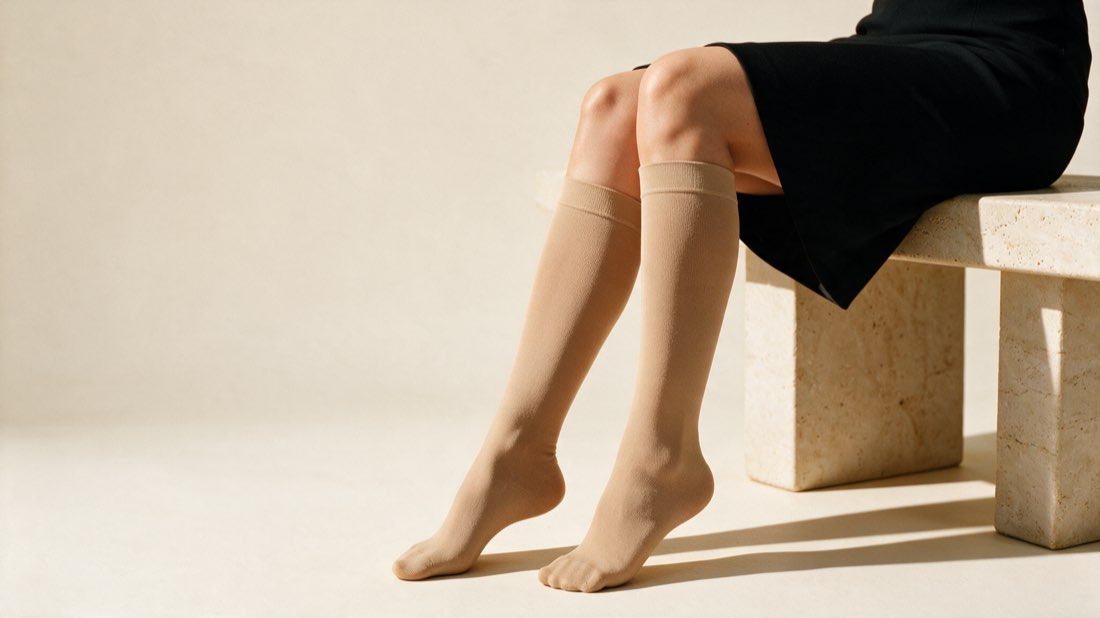
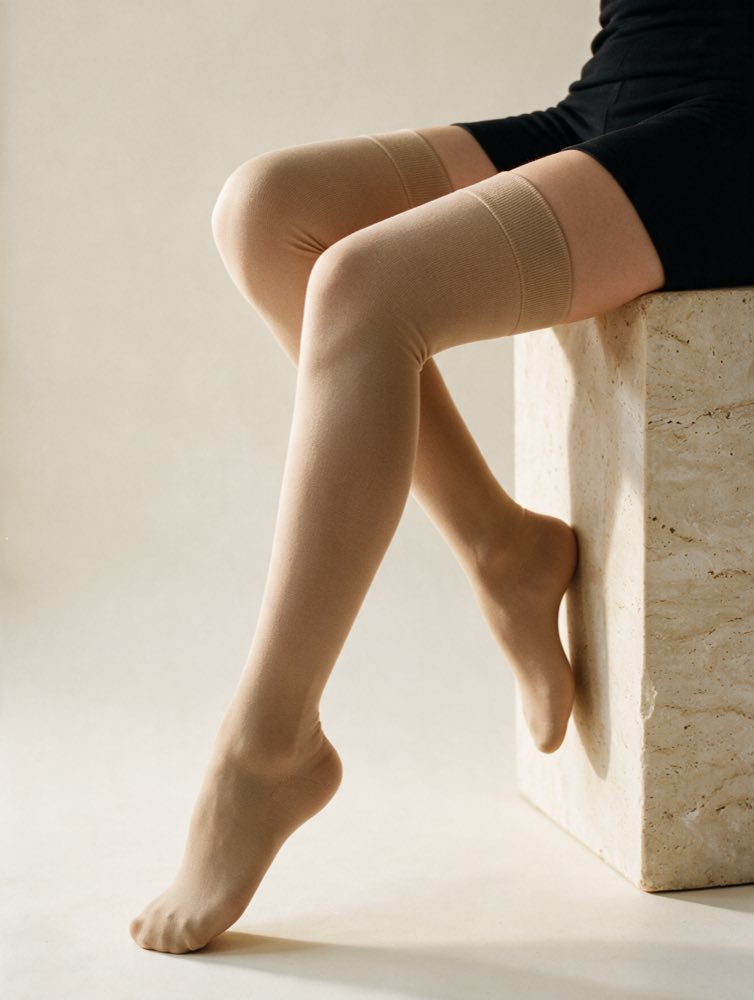
Closed toe is the everyday classic for wearing in shoes. Open toe suits warm weather, sandals, wide feet, long toes and sensitive nails — the therapeutic effect is identical, because compression is measured from the ankle up. Footless styles free the whole foot and work best when the foot itself does not swell.
The same stocking underneath
Open toe, closed toe and footless versions of a Piumella style share the same knit, the same class and the same graduated profile. The toe of a compression stocking carries no therapeutic pressure — the certified gradient starts at the ankle. So this choice is about comfort and wardrobe, not about effect.
Closed toe: the default
Fully covered, nothing to think about, and the natural choice for closed shoes, office wear and colder months. If you are buying your first pair and wear sneakers or pumps most days, start here.
Open toe: summer and sensitive feet
An open toe ends in a soft band under the toes, leaving them free. It wins in summer and sandals, for pedicures, and for anyone whose toes dislike fabric: wide forefeet, long toes, bunions, ingrown or sensitive nails, or mild toe deformities. It also makes the stocking easier to put on — many people slide it on over a silky foot-slip and pull the slip out through the open end.
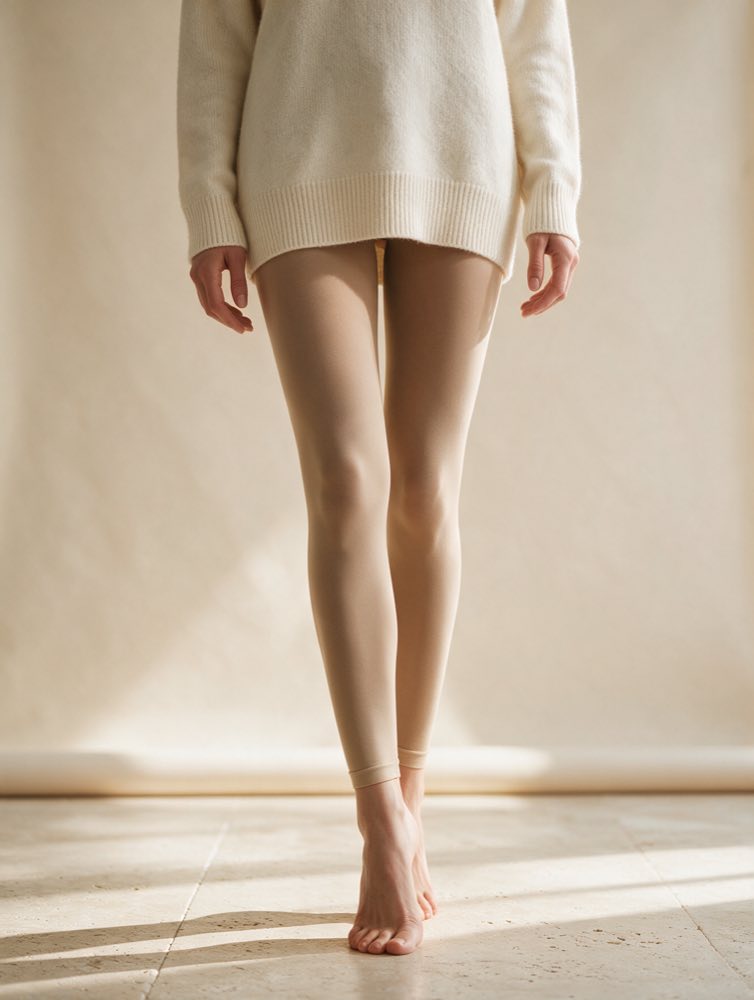
Footless: compression that lives in your wardrobe
Footless leggings (and footless thigh-highs) end at the ankle, so the foot stays completely free — barre class, sandals, warm days, or simply the look of leggings. One honest caveat: if your swelling collects in the foot itself, choose a closed-toe style instead, because an uncompressed foot below a compressed calf can swell more, not less.
Frequently asked
Does open toe reduce the compression effect?
No. The certified pressure gradient is measured from the ankle upward; the toe section of any compression stocking is pressure-free. Open and closed toe versions of the same class are therapeutically identical.
Can I wear normal tights or socks over open-toe compression?
Yes — a thin sock or regular hosiery over an open-toe compression stocking is a common winter combination, and it does not change the compression underneath.
Who should avoid footless styles?
Anyone whose feet visibly swell — after long days, in the evening, in warm weather. Compression above an uncompressed foot can push swelling downward. Choose closed toe in that case.